Last updated: May 2026
You’re eating dinner and your cat gives you those irresistible eyes. Before you share a bite, stop — some of the most common human foods can seriously harm or even kill a cat.
This guide covers the most dangerous foods for cats, why they’re harmful, and what to do if your cat accidentally eats one.
🐱 Why Cats React Differently to Foods Than Humans
Cats have a completely different digestive system and metabolism than humans. Their livers process toxins differently, and they lack certain enzymes needed to break down many substances that humans handle easily. This means foods that are perfectly safe for us can be life-threatening for cats.
☠️ 10 Foods You Should Never Give Your Cat
1. Onions, Garlic, and Chives (Most Dangerous!)
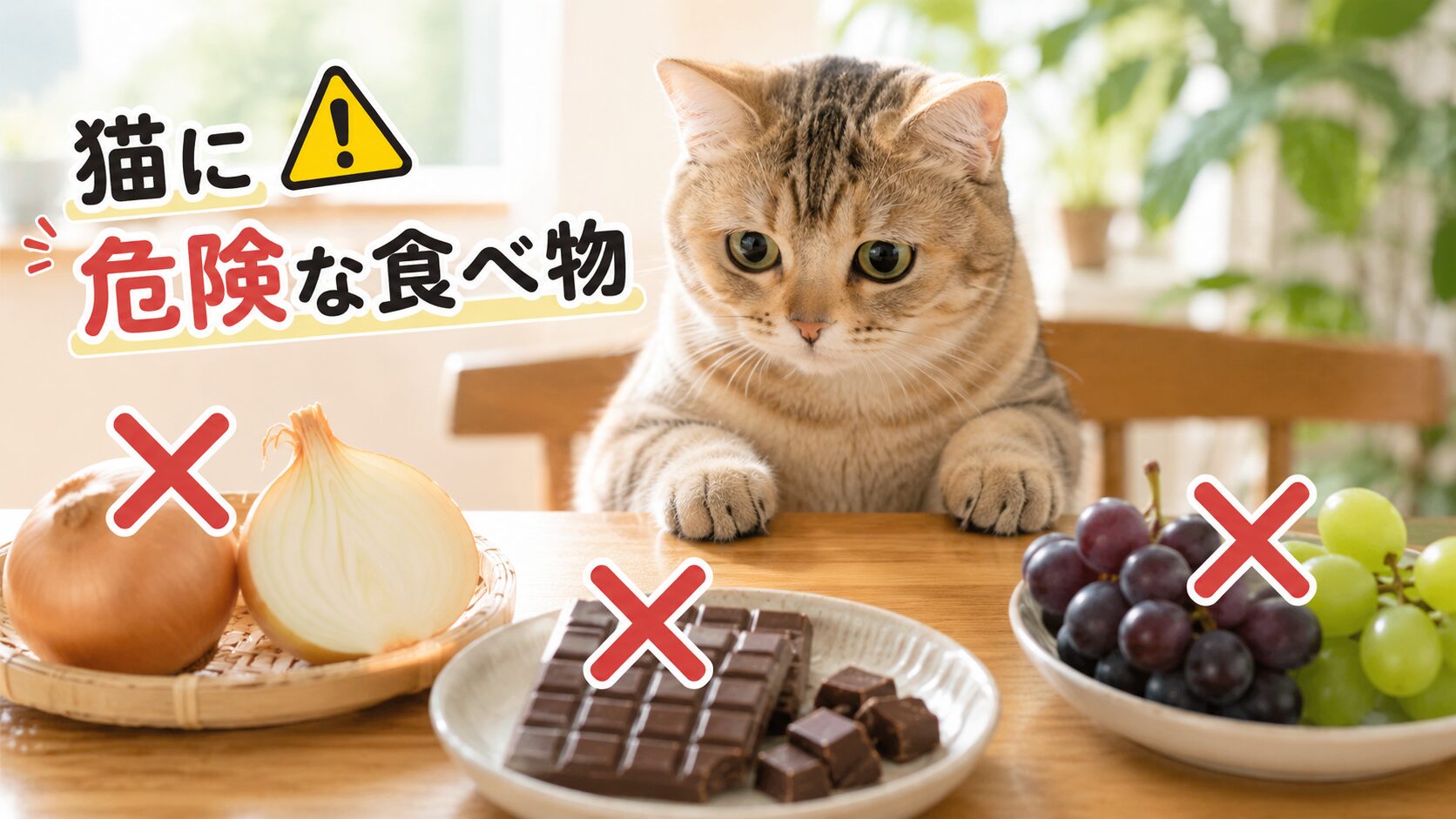
All members of the Allium family — onions, garlic, chives, leeks, and shallots — are highly toxic to cats.
Why it’s dangerous: These foods contain thiosulfates and disulfides that destroy red blood cells, causing hemolytic anemia. Garlic is 5x more toxic than onions for cats.
Dangerous in all forms: raw, cooked, powdered, or in sauces. Symptoms: weakness, pale gums, rapid breathing, vomiting.
2. Grapes and Raisins
Even a small amount of grapes or raisins can cause sudden kidney failure in cats. The exact toxic compound is still unknown, but even a single grape can be dangerous within 24–72 hours.
Symptoms: vomiting, diarrhea, lethargy, decreased urination.
3. Chocolate
Chocolate contains theobromine and caffeine, both toxic to cats. Cats cannot metabolize theobromine efficiently. Dark chocolate and baking chocolate are the most dangerous.
Danger levels: Baking chocolate → dark chocolate → milk chocolate → white chocolate. Symptoms: vomiting, rapid heart rate, tremors, seizures.
4. Caffeine (Coffee, Tea, Energy Drinks)
Caffeine stimulates the central nervous system and heart in ways cats cannot handle safely. Even coffee grounds or tea bags are a risk. Symptoms: restlessness, rapid breathing, heart palpitations, tremors.
5. Alcohol
Cats are far more sensitive to alcohol than humans. A teaspoon can cause liver and brain damage — and a large enough dose can be fatal. Symptoms: vomiting, disorientation, tremors, difficulty breathing.
6. Xylitol (Artificial Sweetener)
Found in sugar-free gum, diet snacks, some peanut butter, and toothpaste. Xylitol can cause a rapid drop in blood sugar and liver damage. Always check labels on “sugar-free” products.
7. Raw Fish (Especially Tuna in Large Amounts)
Raw fish contains thiaminase, an enzyme that destroys Vitamin B1 (thiamine), essential for brain and nerve function. Excessive tuna can also cause mercury poisoning. A little cooked fish as a treat is fine — raw fish regularly is not.
8. Dairy Products (Milk, Cheese, Ice Cream)
Most adult cats are lactose intolerant — they lose the enzyme to digest lactose after kittenhood. Dairy causes digestive upset, gas, and diarrhea. While not life-threatening, it’s best avoided.
9. Raw Dough and Yeast
Yeast continues to ferment inside a cat’s warm stomach, producing alcohol and causing dangerous bloating and potential intestinal blockage. Symptoms: swollen belly, vomiting, disorientation.
10. Avocado
Avocados contain persin, toxic to many animals. The high fat content can cause vomiting, diarrhea, and heart problems. The pit is also a choking hazard.
🚨 What to Do If Your Cat Eats Something Toxic
- Stay calm and remove the food immediately
- Note the amount eaten and the time
- Call your vet or pet poison hotline right away (ASPCA: +1-888-426-4435)
- Do NOT induce vomiting unless instructed by a vet
- Bring the food packaging to the vet
📝 Quick Reference Table
| Food | Risk Level | Main Danger |
|---|---|---|
| Onions & Garlic | ⚠️⚠️⚠️ Extreme | Destroys red blood cells |
| Grapes & Raisins | ⚠️⚠️⚠️ Extreme | Kidney failure |
| Chocolate | ⚠️⚠️⚠️ High | Heart & nervous system |
| Caffeine | ⚠️⚠️ High | Heart & nervous system |
| Alcohol | ⚠️⚠️⚠️ High | Liver & brain damage |
| Xylitol | ⚠️⚠️ High | Blood sugar crash |
| Raw Fish | ⚠️⚠️ Moderate | Vitamin B1 deficiency |
| Dairy | ⚠️ Low-Moderate | Digestive upset |
| Raw Dough | ⚠️⚠️ High | Bloating & alcohol |
| Avocado | ⚠️ Moderate | Vomiting & heart issues |
📚 Sources
- ASPCA – Toxic and Non-Toxic Foods for Cats
- PetMD – Foods Cats Can’t Eat
- VCA Hospitals – Cats and Toxic Foods
- Cornell Feline Health Center
This article is for informational purposes only. Always consult a licensed veterinarian for medical advice specific to your cat.

コメント