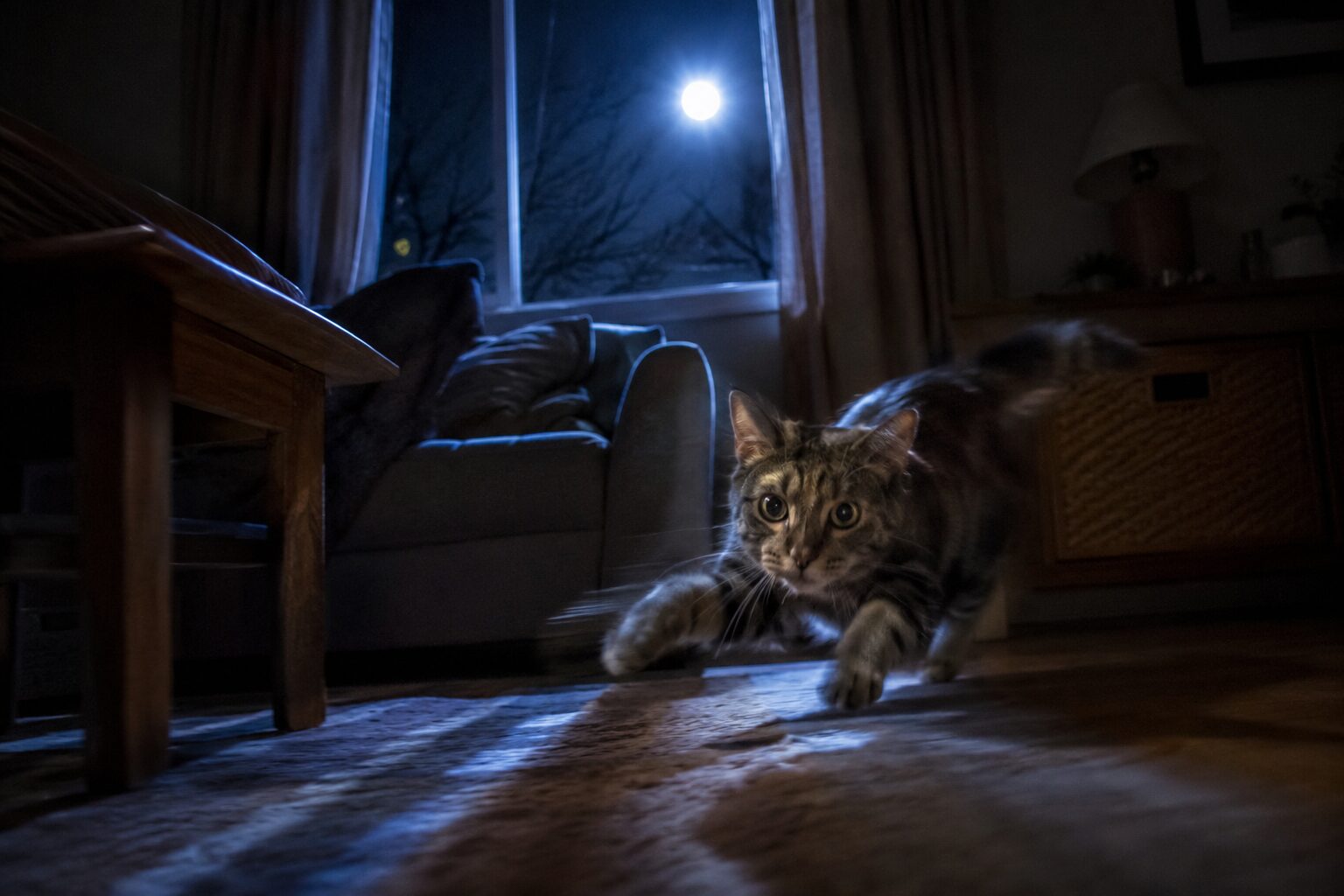
Does your cat suddenly start racing around the house at 2 AM, knocking things over and pouncing on your feet? You’re not alone — this is one of the most common complaints among cat owners.
The good news: this behavior is completely normal. But understanding why it happens can help you (and your cat) sleep better at night.
🐱 Your Cat Is Not Nocturnal — Here’s the Truth
Many people think cats are nocturnal (active at night), but that’s actually a myth.
Cats are crepuscular — meaning they are naturally most active at dawn and dusk. This is because their wild ancestors evolved to hunt at these times, when prey like mice and birds are most active.
What is “crepuscular”?
It means being most active during twilight hours — early morning and early evening. Think of it like your cat’s “rush hour.”
🌙 5 Reasons Your Cat Goes Crazy at Night
1. Pent-Up Energy (The #1 Reason)
Indoor cats spend most of the day sleeping while you’re at work. By the time evening rolls around, they have a lot of energy stored up — and they need to release it.
This burst of wild energy is called the “zoomies” (scientists call it FRAP: Frenetic Random Activity Period).
2. Natural Hunting Instincts
At dusk, your cat’s brain says: “Time to hunt!” Even though there’s no prey in your living room, your cat will run, pounce, and leap as if they’re chasing something through the jungle.
According to PetMD, this instinctual behavior is perfectly healthy and normal.
3. Your Cat Napped All Day
Cats sleep 12–16 hours a day. If your cat napped all afternoon, they’ll naturally be full of energy when you’re trying to sleep.
4. Hunger Before Bed
If your cat’s last meal was early in the evening, they may be hungry by midnight. Hunger can make cats more restless and vocal.
5. Medical Issues (When to Worry)
In some cases, sudden changes in nighttime behavior can signal a health problem:
- Hyperthyroidism — causes excessive energy and restlessness
- Cognitive Dysfunction Syndrome (CDS) — a form of dementia in older cats
- Arthritis or pain — discomfort can cause restlessness at night
- Kidney disease — can cause increased thirst and nighttime activity
🏠 How to Calm Your Cat Down at Night
1. Play Before Bed
Give your cat an intense 15–20 minute play session right before your bedtime. Use a wand toy, laser pointer, or crinkle balls to simulate hunting. After “catching their prey,” your cat will naturally want to eat, groom, and sleep.
2. Feed a Small Meal at Bedtime
A small, high-protein meal right before bed mimics the natural hunt → eat → sleep cycle. This helps signal to your cat’s brain that the day is over.
3. Add Daytime Enrichment
Leave puzzle feeders, window perches, or cat trees for your cat to use during the day. A stimulated cat during the day = a calmer cat at night.
🚨 When To See a Vet
See a vet if your cat suddenly starts being active at night when they never were before, is over 10 years old and showing new behavioral changes, is meowing excessively at night, seems confused or disoriented, or has other symptoms like weight loss or increased thirst.


コメント